
最新动态

张驰交大分享:设计、品牌、AI——企业穿越周期的三重引擎
—— 从上海交大泉州班 36 位企业家的课堂,看懂制造业穿越周期的底层逻辑
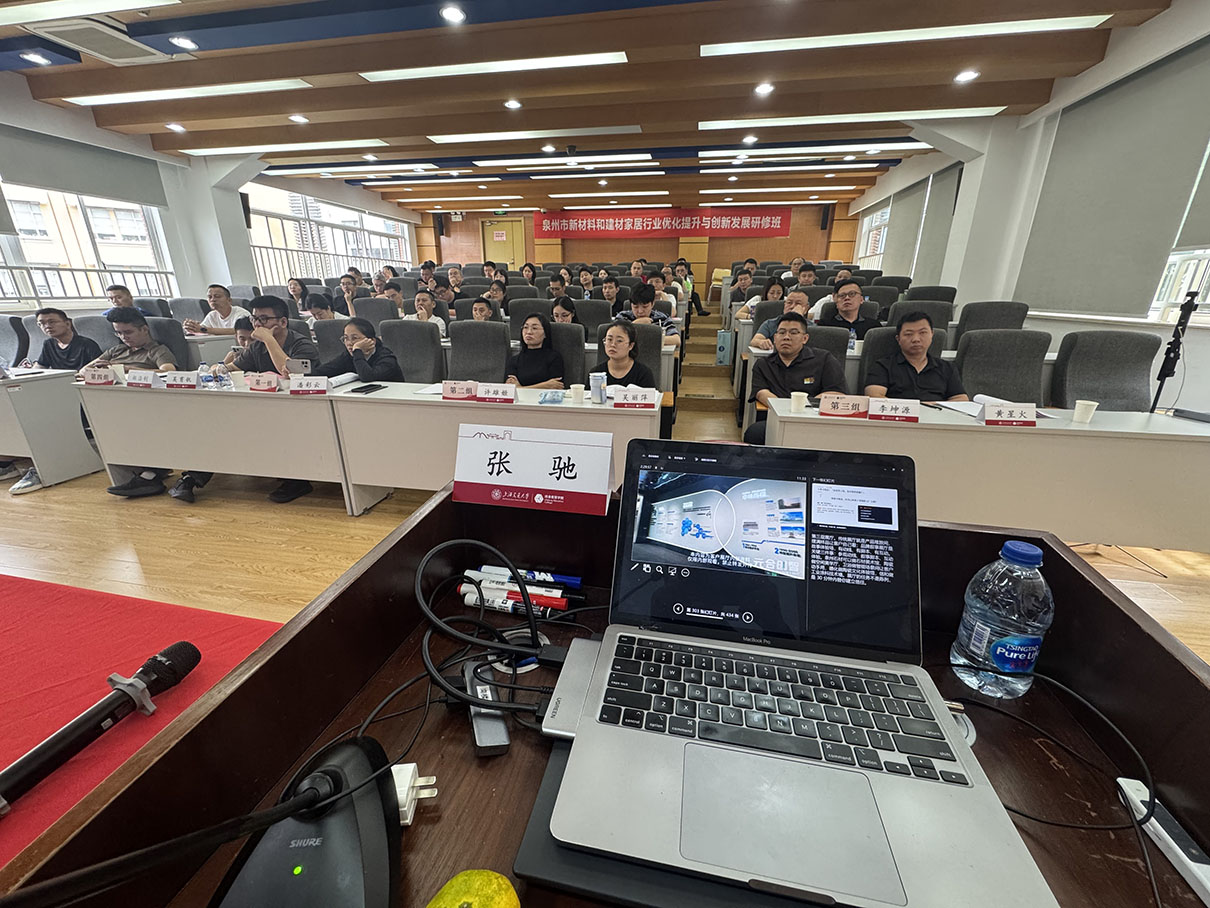
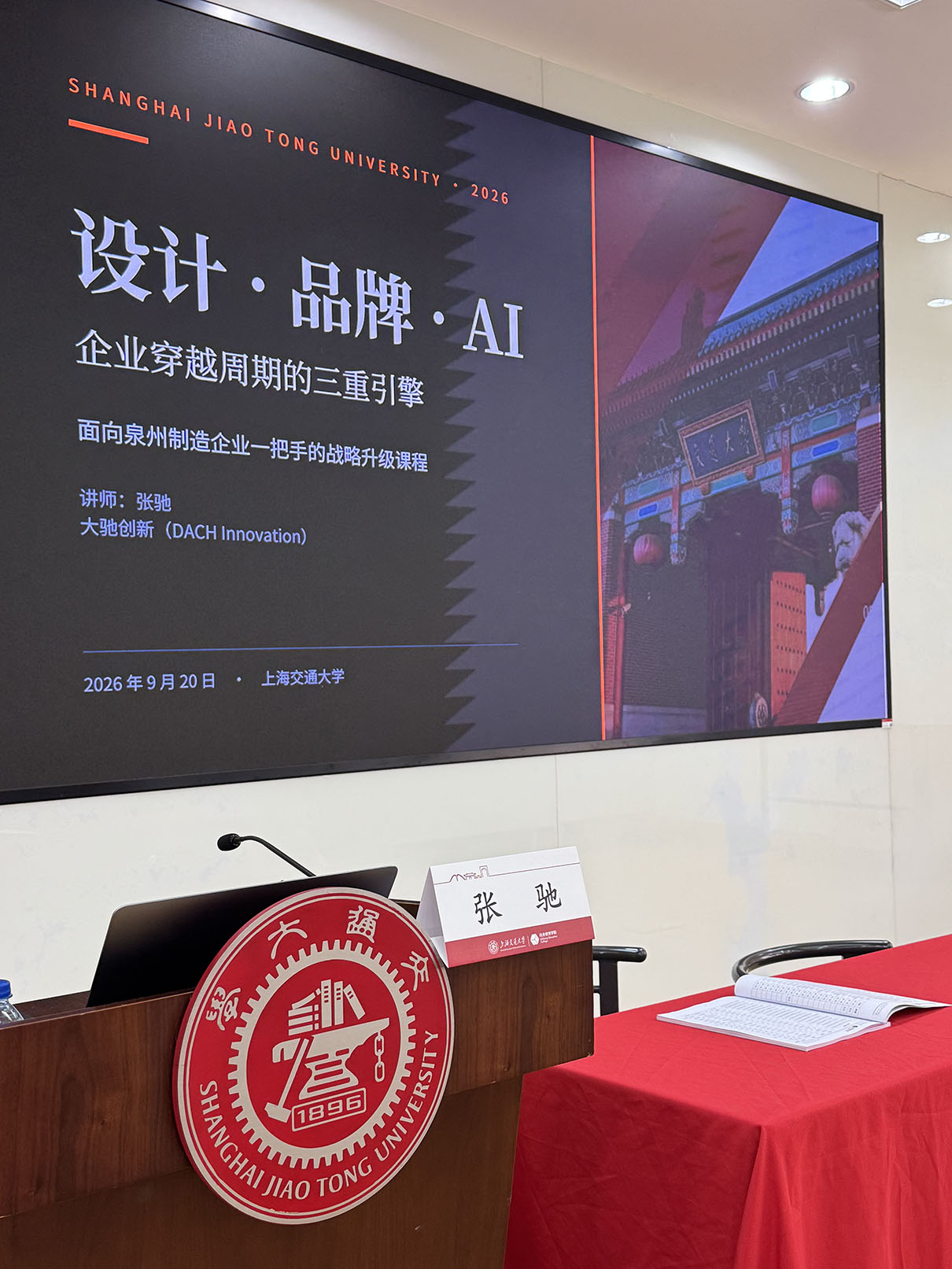
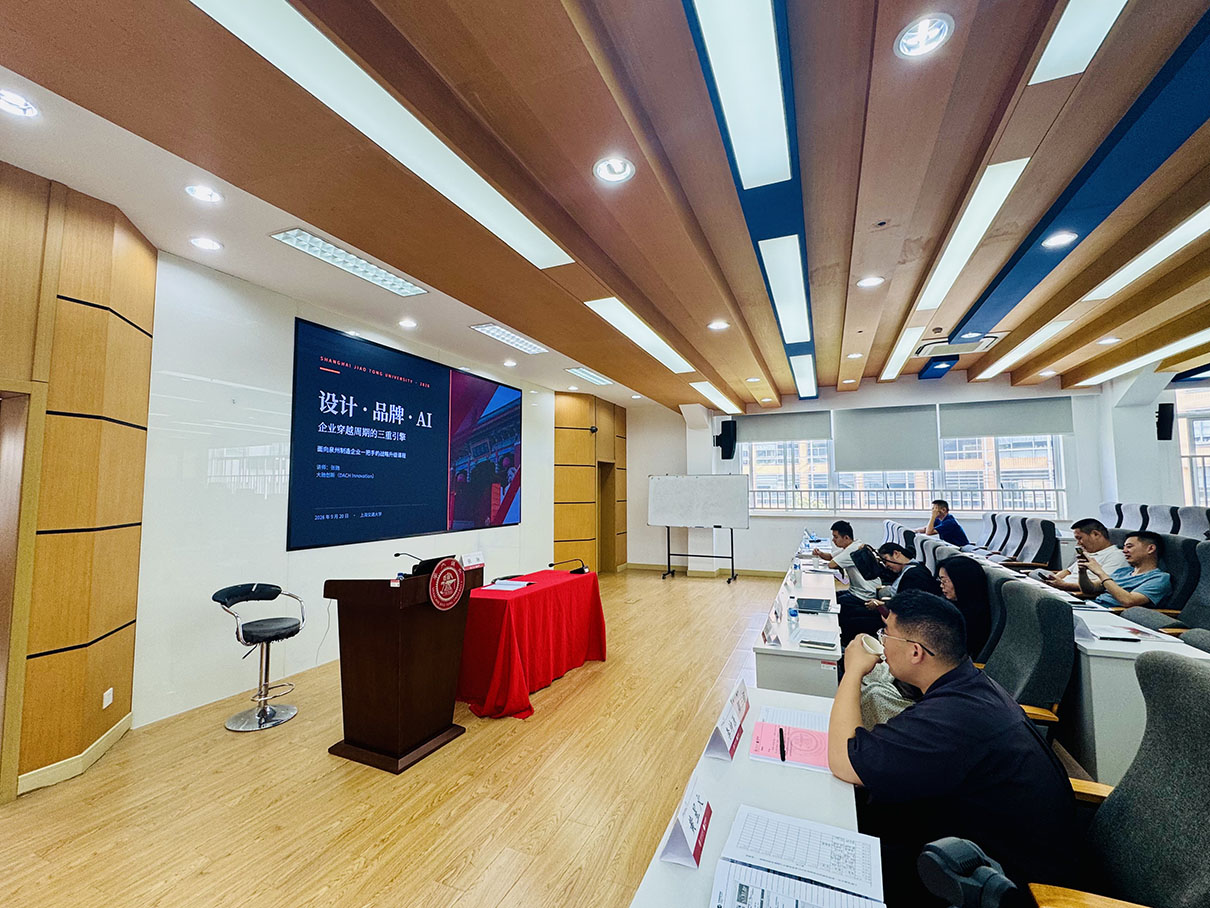
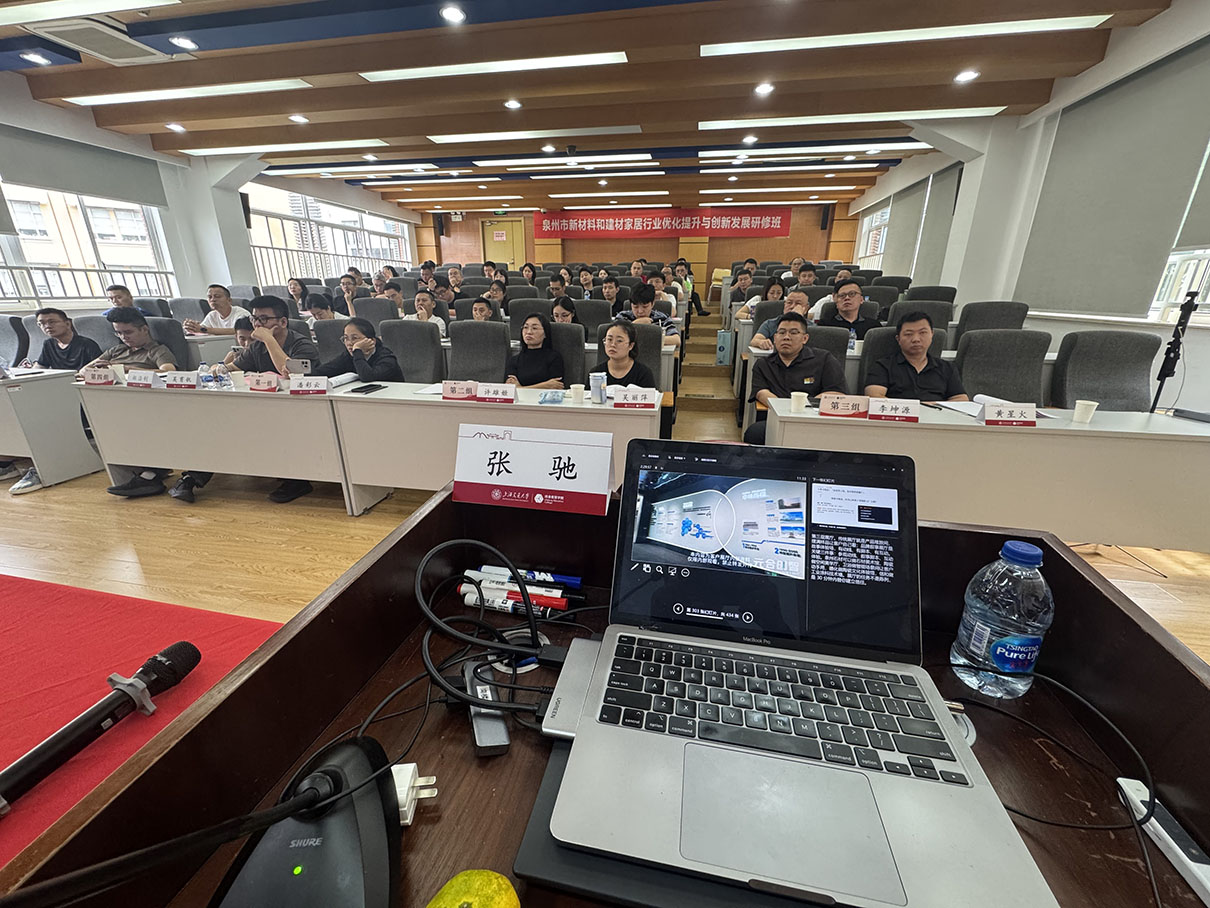
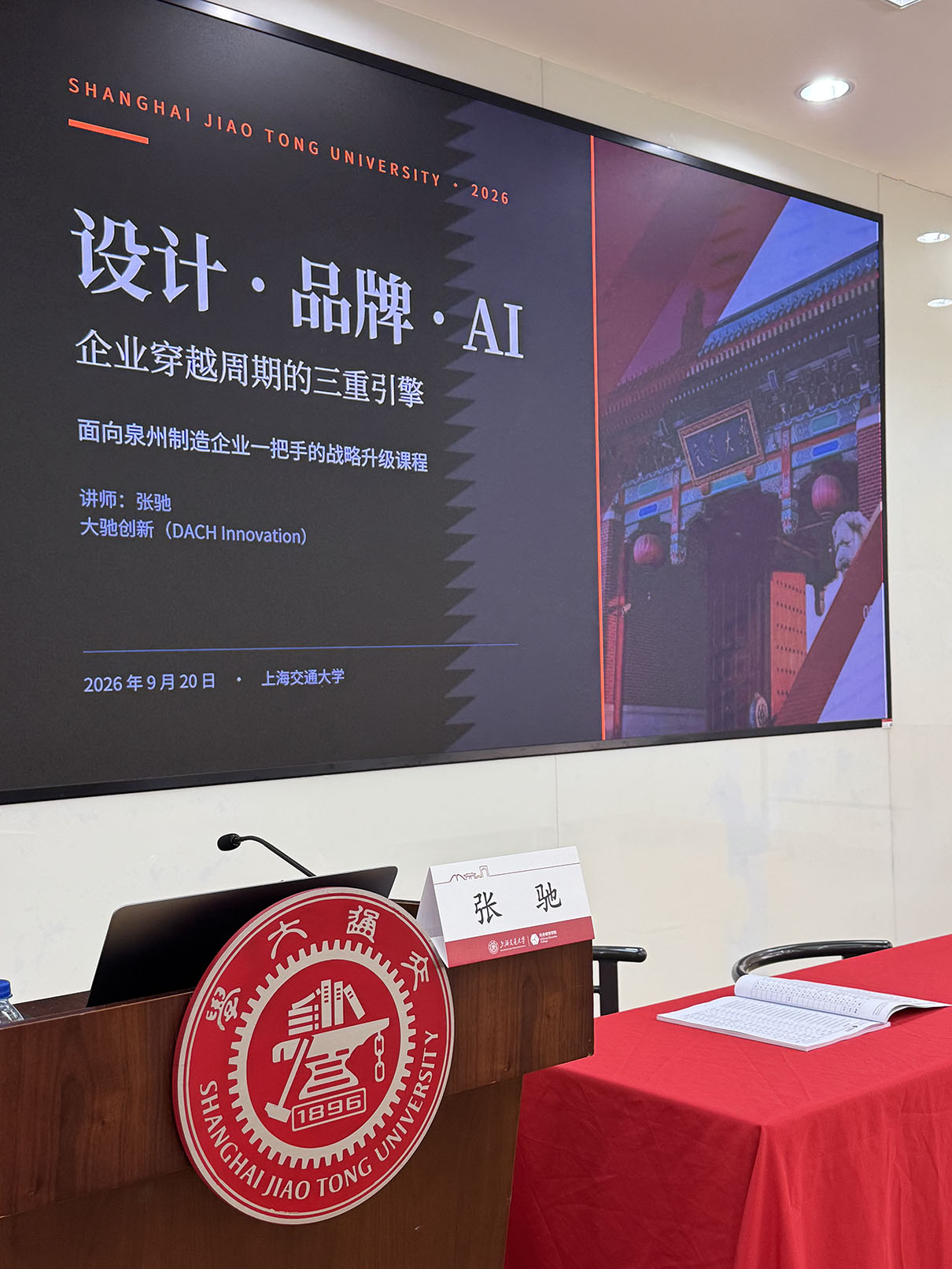
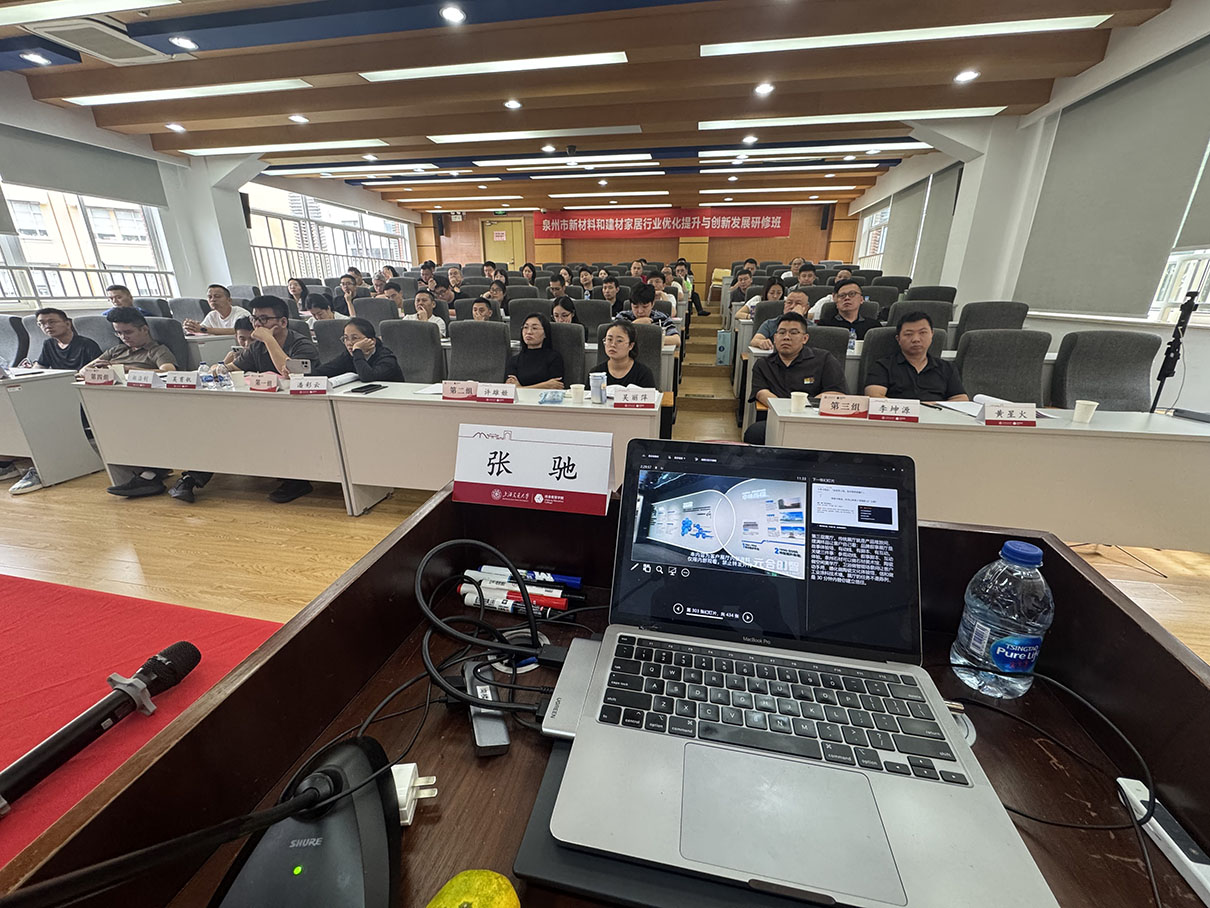
2026 年 9 月 20 日,上海交通大学的一间教室里,坐着 36 位来自泉州的企业家。他们参加的是泉州市新材料和建材家居行业优化提升与创新发展研修班,这一天的课,名叫《设计・品牌・AI:企业穿越周期的三重引擎》。
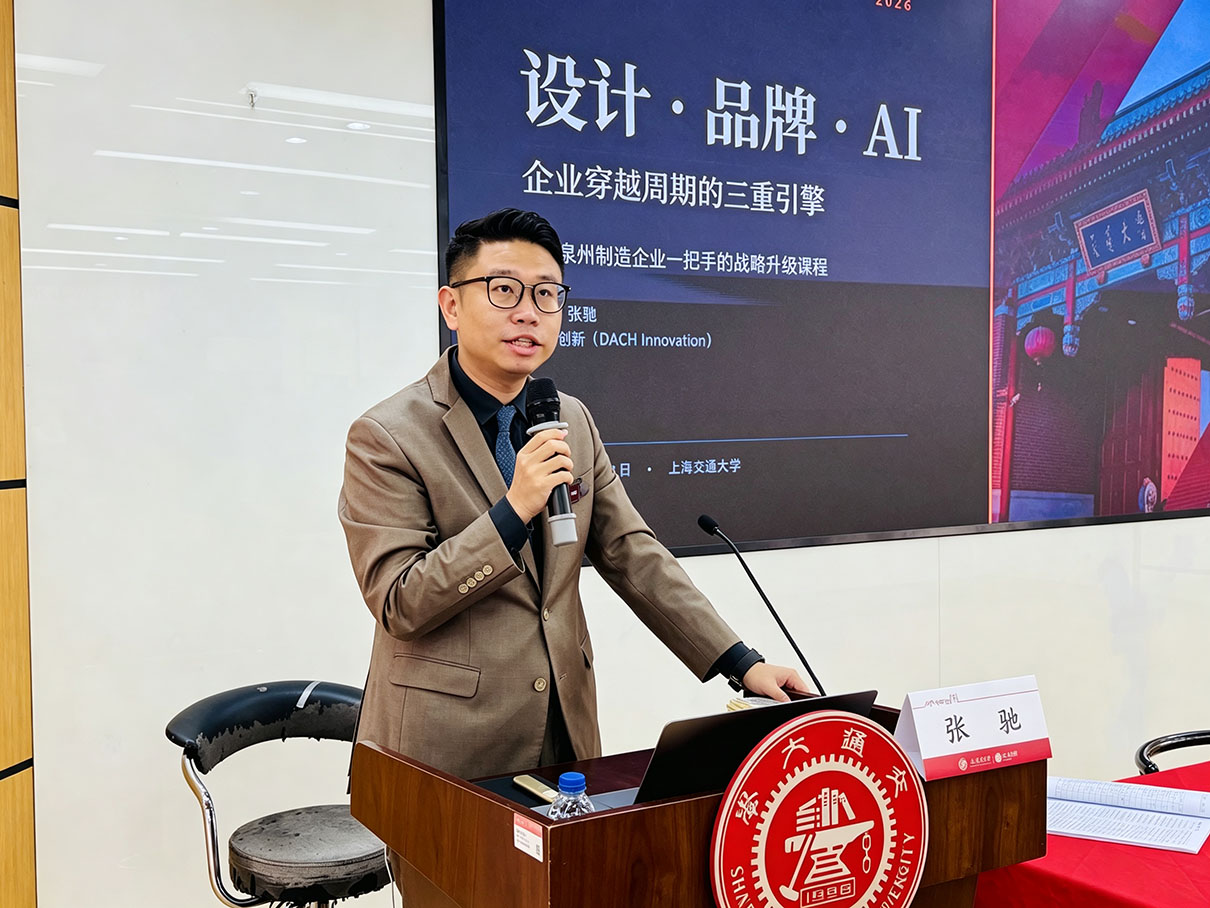
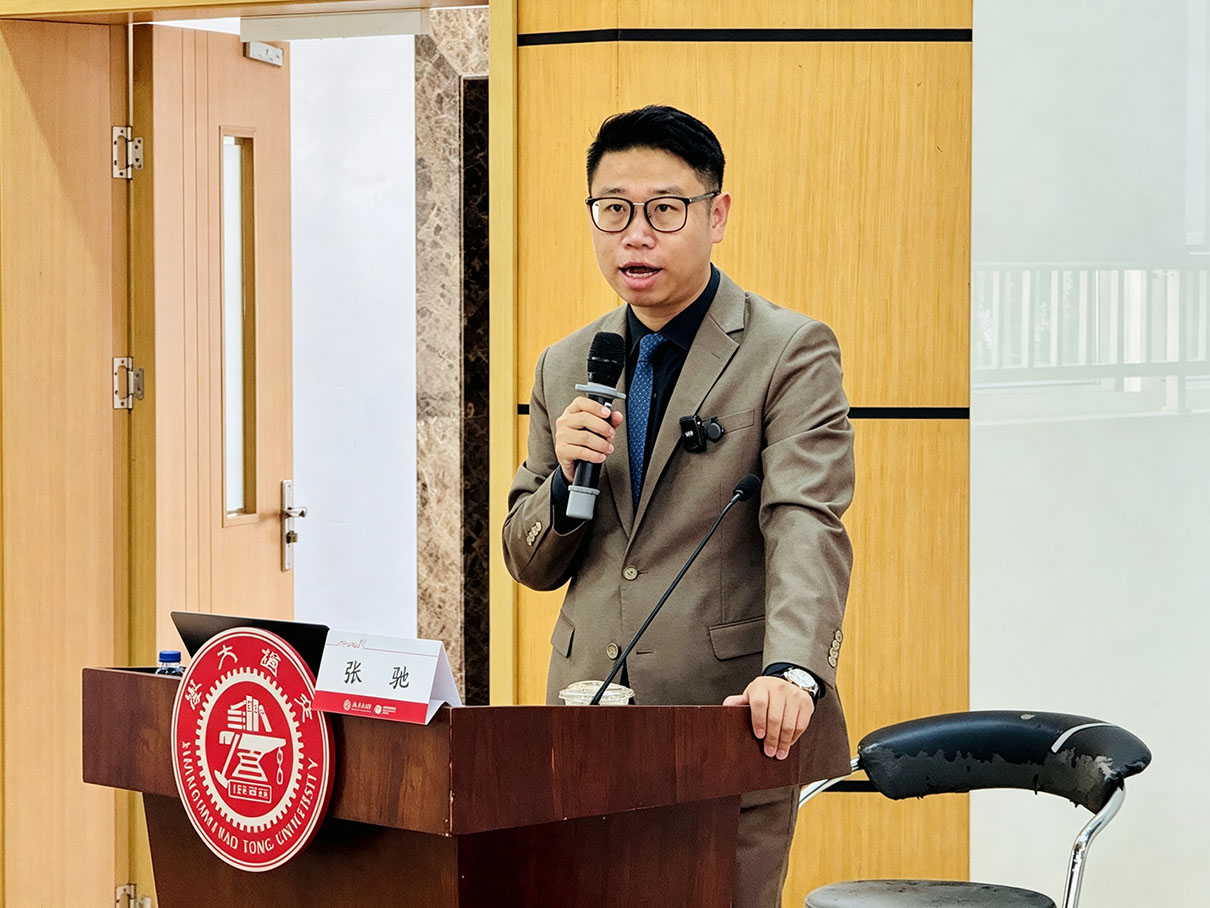
讲课的人叫张驰。他是大驰创新的创始人,也是上海交大、浙大、福耀科技大学等高校的客座讲师,《三体智能革命》的联合作者 —— 这本智能制造领域的畅销书,被列为工信部指定参考书籍。过去十年,他以吴晓波频道特约观察员的身份,几乎每年都去汉诺威工业展,看完了欧洲最顶尖的一批工厂。
课前,他的团队把这 36 家企业的公开信息摸了一遍底:只有约 10 家有独立官网,超过一半在 AI 搜索里找不到名字。课堂上,张驰让所有人当场用手机问 AI「推荐福建泉州做石材的企业」,答案里出现的是水头石材集群、溪石集团、鹏翔实业 —— 而在座的大多数企业,查无此人。
一位老板课后对他说:「我们产品不差,利润却一年比一年薄。客户来看一眼车间,转身就去了报价更低的那家。」
这是一个属于中国制造的集体问题。
便宜的时代,结束了
泉州是中国制造业的一个缩影。南安水头聚集着约 1700 家石材企业,占全国约 60% 的市场份额;晋江陶瓷规模庞大;泉州卫浴跑出了九牧。过去三十年,这里的商业逻辑简单而有效:把成本压到最低,把产能做到最大,用价格拿下订单。
但这个逻辑正在失效。
张驰把企业的困境归结为三道坎:同质化竞价把利润压到极限,量还在,利没了;客户走进厂区的前三分钟就已经给出判断,大门破旧、车间脏乱,订单自然流向看起来更专业的对手;年轻人招不进、留不住,不是工资不够高,而是车间没有尊严感。
更深的变化发生在客户决策的方式里。过去采购找供应商,是在搜索结果里翻十几个链接,自己筛选、比价、考察;现在越来越多的采购直接问 AI,AI 给出三五家推荐,客户只考察名单上的企业。已有行业调研显示,超过六成的 B 端采购人员开始用 AI 辅助筛选供应商。
「不在 AI 的推荐名单里,你连比价的机会都没有。」张驰说。
成本竞争的时代翻篇了。接下来的竞争,围绕着三个新的战场展开:客户愿不愿意来、愿不愿意买、能不能找得到你。
被低估的 2%
第一个战场,是工厂本身。
在建厂预算里,设备采购通常占六成,土建占三成,而设计费只占 2% 到 3%。绝大多数中国老板把钱花在了「看得见」的设备上,但恰恰是这 2% 的设计,决定了未来三十年的物流动线、人员留存、品牌形象和资产增值空间。
设计费省了几十万,未来三十年每天都在为这个决定买单 —— 这是张驰在德国工厂里看了将近十年之后,得出的结论。
在辛德芬根的奔驰 Factory 56,他看到的是另一套逻辑。这座工业 4.0 工厂没有传统生产线,取而代之的是 400 台无人驾驶 AGV,总能源需求比传统装配设施低 25%,屋顶的光伏系统支撑着碳中和运行。碳中和不是后来加装的,而是从设计第一天就写进图纸里的。在气动元件百年企业 Festo,访客进门拿到的不是产品手册,而是「工厂游览手册」,照明会随时间切换冷暖光,早晨冷光提神,傍晚暖光舒缓。
德国人的工厂,本身就是最大的产品和最有说服力的销售。
这也是大驰创新的方法论起点。张驰坚持「先工艺、后建筑」:先理清战略目标和生产流程,再选设备,最后确定建筑形态 ——IE 工业工程专家先介入,建筑师后动笔。中国老板习惯的顺序正好相反:先盖房子,再放设备,结果往往是厂建好了设备进不去,物流转不开,再花大价钱改造。
他把这套从德国系统工程转化来的方法,拆成 11 个维度:战略、资本、业务、规划、智造、配套、成本重构「里子」,品牌、建筑、景观、产品重塑「面子」。在虚拟世界里,BIM 和数字孪生先把工厂完整「预演」一遍,削减 30% 以上的试错成本;面向欧洲客户,ESG 则从节能要求变成了碳足迹、社区化生活区和合规治理的整体战略。
道理最终落在案例上。润丰股份(301035),这家中国农药出口龙头,是大驰创新连续服务了六年的客户。客户的车还没停稳,就说出了那句让张驰印象深刻的话:「你们这个厂,一看就和别的农药厂不一样。」
客户的 30 分钟
工厂建好了,第二个战场是信任。
两家石材厂报价差 15%,客户选哪家?答案几乎是注定的:大门整洁、有展厅、产品像艺术品、老板在会议室用 PPT 介绍的那一家。
张驰把客户从下车到签约的过程,叫做「信任动线」。这条 30 分钟的路线有五站:入口形象、参观走廊、品牌展厅、工艺实验室、洽谈成交。大多数中国工厂的问题,不是实力不够,而是在某一站上「信任掉了链子」—— 要么没有展厅,要么车间不敢让人看,要么技术能力讲不出来。
对应的,是大驰创新的四层架构:建筑从工艺倒推,产品、标识、包装、色卡说同一种视觉语言,展厅从「产品堆放间」变成「故事体验场」,再到食堂、休息区、员工通道这些藏在深处的工业文化层。
设计的商业回报,在产品端体现得更直接。新华医疗一台售价 150 万元的压片机,重新做工业设计后,强电弱电后移、阳极氧化铝支柱、LED 氛围灯,让外观配得上高端定位,这个单品的年产值做到了 2 亿元。
对 B 端企业而言,品牌的第一责任人永远是一把手。工厂怎么建、展厅怎么布、客户怎么接待,这些决策市场部做不了主。
看不见,就不存在
第三个战场,是 AI 时代的「可见性」。
张驰把它叫做 GEO,生成式引擎优化。和传统 SEO 争搜索排名不同,GEO 争的是被 AI 写进答案。逻辑朴素:AI 只引用它读得懂、信得过的信源 —— 官网要把参数和案例结构化,百科、权威媒体、行业平台要形成可交叉验证的信息,再围绕「泉州石材厂家」「福建陶瓷供应商」这类客户真实的提问做语义覆盖。
第一步甚至不用花一分钱:用豆包、DeepSeek、Kimi 这些客户常用的 AI,搜一遍自己的企业,看 AI 怎么描述你、推荐了谁。被 AI 反复推荐的同行,就是免费的学习对象。
这套动作总投入 1 到 3 万元、3 到 6 个月就能见效,可能是一把手工程里门槛最低、回报最快的一件事。
尊重常识的人
三小时的课结束,有学员在朋友圈写下:「今天是我近几年听过的最好的一门课,深受启发,全程无困点。」张驰自己则记录了一句:「企业家学员们求知欲很高,把适合制造业发展的设计、品牌、AI 讲透了。」
大驰创新总部在上海,在杭州、青岛、美国洛杉矶和德国法兰克福设有分支,十二年间服务了超过 100 家智能制造企业,覆盖汽车、新能源电池、装备、化工新材料、医疗器械和消费品,代表案例包括润丰股份、浙江新德宝、万事达钢品研究院等。他们做的事,说起来很简单:让企业设计的是一座工厂,而不仅仅是一幢建筑;把企业家的愿景,落成一个好看又好用的现实场景。
这家公司的方法论可以总结成十二个字:尊重常识,尊重制造,持续迭代。
从「世界工厂」的草莽年代,到智能制造的深水区,再到 AI 重塑采购决策的今天,中国制造的工具换了一代又一代,但有一条常识始终没变 —— 客户愿意为专业、体面和信任买单。
工厂不会说话。但一座好的工厂,会替老板把该说的话,都说完。
Zhang Chi at Shanghai Jiao Tong University: Design, Brand & AI — Three Engines for Weathering the Economic Cycle
On September 20, 2026, in a classroom at Shanghai Jiao Tong University, 36 entrepreneurs from Quanzhou sat listening. They were attending an advanced training program on the optimization, upgrading and innovative development of Quanzhou's new materials, building materials and home furnishing industries. That day's course was titled Design · Brand · AI: The Three Engines Carrying Enterprises Through the Cycle.
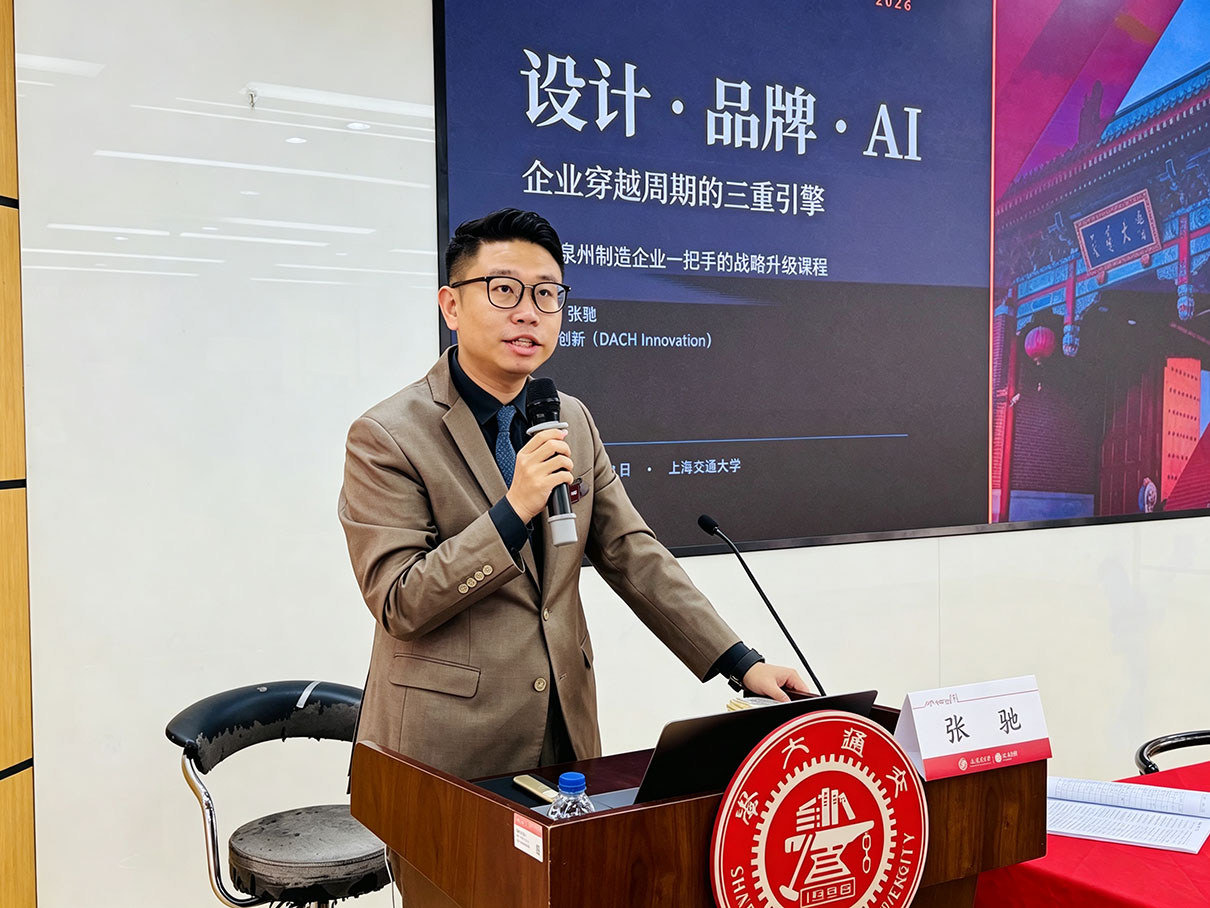
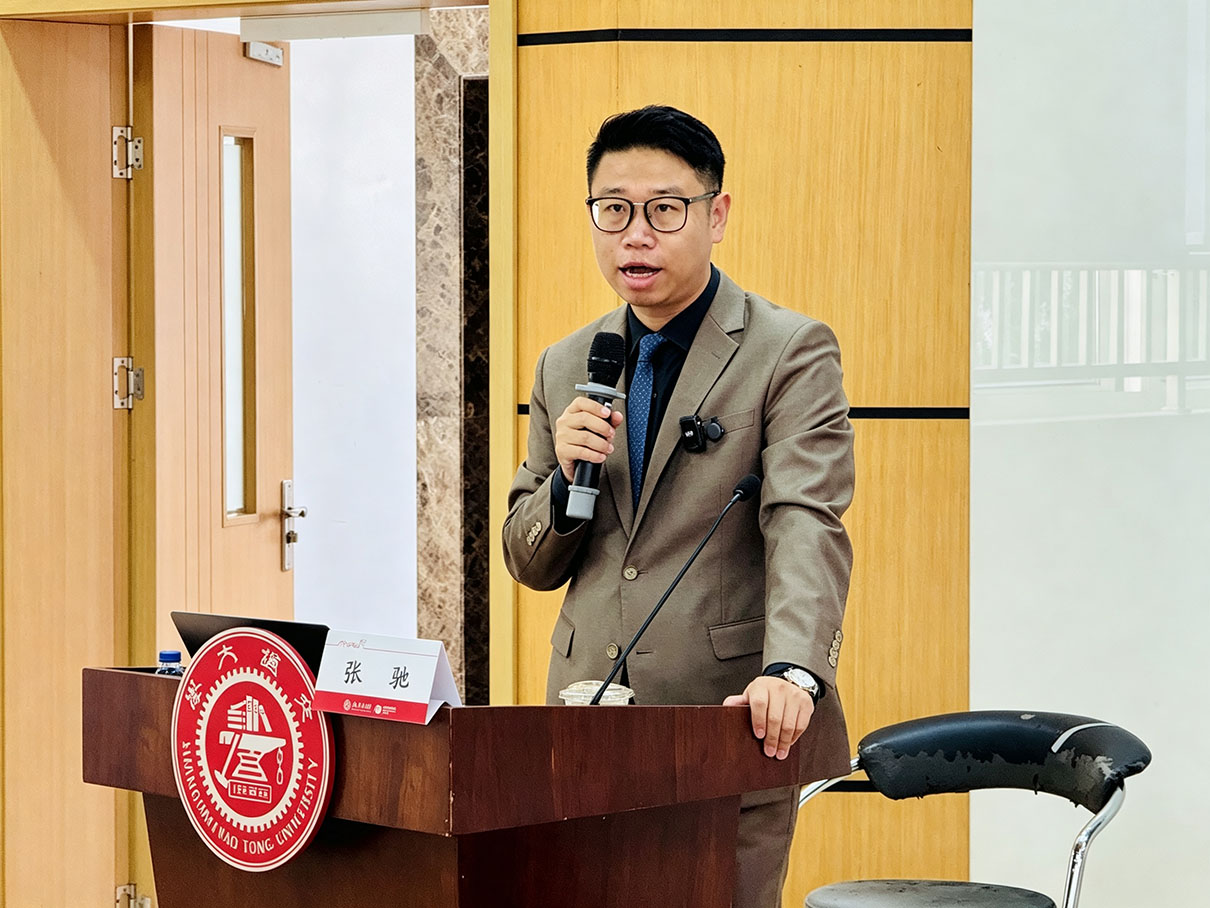
The lecturer was Zhang Chi — founder of DACH Innovation; visiting lecturer at Shanghai Jiao Tong University, Zhejiang University and Fuyao University of Science and Technology; and co-author of The Three-Body Intelligent Revolution, a smart-manufacturing bestseller designated as a reference book by the Ministry of Industry and Information Technology. For the past decade, as a special observer for the Wu Xiaobo Channel, he has traveled to the Hannover Messe almost every year, walking through Europe's most advanced factories.
Before the class, his team reviewed the public records of all 36 companies: only about ten had independent websites, and more than half were nowhere to be found in AI search. During the session, Zhang Chi asked everyone to pull out a phone and ask an AI to "recommend stone companies in Quanzhou, Fujian." The answers named the Shuitou stone cluster, Xishi Group and Pengxiang Industry — while most of the companies in the room were absent from the list.
After class, one owner told him: "Our products aren't bad, yet margins get thinner every year. Customers take one look at the workshop, then turn around and go with whoever quotes less."
This is a collective problem for Chinese manufacturing.
When the Era of Cheap Came to an End
Quanzhou is a microcosm of Chinese manufacturing. Shuitou, in Nan'an, is home to roughly 1,700 stone companies accounting for about 60% of the national market; Jinjiang runs a vast ceramics industry; and Quanzhou's bathroom sector has produced JOMOO. For three decades, the local business logic was simple and effective — push costs to the floor, scale capacity to the maximum, and win orders on price.
That logic is now breaking down.
Zhang Chi distills the predicament into three hurdles. Homogenized price competition squeezes margins to the bone: the volumes remain, the profits don't. Customers make up their minds within the first three minutes of entering a plant — a run-down gate and a dirty, cluttered workshop send orders to a competitor that simply looks more professional. And young workers can neither be hired nor retained, often not because pay is low, but because the workshop offers no sense of dignity.
A deeper shift is reshaping how customers decide. Purchasers once hunted suppliers by sifting through a dozen search links, screening, comparing and visiting on their own. Increasingly, they simply ask an AI, which recommends three to five names; buyers visit only the firms on that list. Industry research already shows that more than 60% of B2B procurement professionals use AI to help screen suppliers.
"If you're not on the AI's list, you don't even get the chance to compete on price," Zhang Chi says.
The age of cost competition has closed. The contest ahead plays out across three new battlegrounds: whether customers are willing to visit you, willing to buy from you, and able to find you at all.
The Underestimated 2%
The first battleground is the factory itself.
In a typical construction budget, equipment takes roughly 60% and civil works another 30%, while design claims only 2% to 3%. Most Chinese owners spend on the equipment they can see — yet it is precisely that 2% for design that shapes the next thirty years of logistics flows, worker retention, brand image and asset appreciation.
Save a few hundred thousand yuan on design, and you pay for that decision every day for the next thirty years — a conclusion Zhang Chi reached after nearly a decade inside German factories.
At Mercedes-Benz's Factory 56 in Sindelfingen, he found a different logic. There is no conventional production line in this Industry 4.0 plant; instead, 400 autonomous guided vehicles move through the hall, whose total energy demand runs 25% below a conventional assembly facility, with rooftop photovoltaics underwriting carbon-neutral operation. Carbon neutrality was not retrofitted later — it was written into the blueprints on day one. At Festo, the century-old pneumatic-components maker, visitors receive not a product catalog but a "factory tour handbook," and the lighting shifts with the hour — cool light to sharpen focus in the morning, warm light to ease the evening.
For the Germans, the factory itself is the ultimate product and the most persuasive salesperson.
This is also the starting point of DACH Innovation's methodology. Zhang Chi insists on "process first, architecture after": clarify strategic goals and production processes, then select equipment, and only then fix the building's form — industrial engineering experts brought in before architects ever put pen to paper. Chinese owners tend to reverse the sequence, erecting the shell first and forcing the equipment in, only to discover the machines won't fit and the logistics won't flow, leaving costly retrofits.
He breaks the method, adapted from German systems engineering, into eleven dimensions: strategy, capital, business, planning, smart manufacturing, amenities and costs rebuild the "inside"; brand, architecture, landscape and product reshape the "face." In the virtual world, BIM and digital twins rehearse the entire plant in advance, cutting trial-and-error costs by more than 30%. For European customers, ESG has evolved from an energy-saving demand into an integrated strategy of carbon footprints, community-style living quarters and governance compliance.
Ultimately, the argument rests on a case. Runfeng (SZSE: 301035), a leader in China's pesticide exports, has been a DACH client for six consecutive years. Before the customer's car had even stopped, came the line Zhang Chi still remembers: "Your factory is clearly not like other pesticide plants."
The Customer's Thirty Minutes
With the factory built, the second battleground is trust.
Two stone companies quote 15% apart — which one wins? The answer is nearly foreordained: the one with the tidy gate, the showroom, products displayed like art, and an owner who presents from a deck in a proper meeting room.
Zhang Chi calls the journey from arrival to signing the "trust pathway." This thirty-minute route has five stations: the entrance, the visitor corridor, the brand showroom, the process laboratory and the closing negotiation. The trouble with most Chinese factories is not a lack of capability but a broken link at one of these stations — no showroom, a workshop they dare not show, or a technical story they cannot tell.
DACH's four-layer architecture maps directly onto this chain: the building is reverse-engineered from production processes; products, signage, packaging and color cards speak one visual language; the showroom is transformed from a product storeroom into a storytelling experience; and the industrial-culture layer lives in the canteens, rest areas and staff corridors tucked out of sight — the spaces that decide whether young workers stay.
The commercial return is even more direct at the product level. After Shinva Medical Instrument redesigned a tablet press worth 1.5 million yuan — moving high- and low-voltage systems to the rear, with anodized aluminum columns and ambient LED lighting to match a premium position — the single line reached 200 million yuan in annual output.
For B2B companies, the brand's first and last owner is always the person at the top. How the factory is built, how the showroom is arranged, how customers are received — no marketing department can make those calls.
Out of Sight, Out of Existence
The third battleground is visibility in the age of AI.
Zhang Chi calls it GEO — Generative Engine Optimization. Where traditional SEO contests search rankings, GEO contests being written into the AI's answer. The logic is plain: AI cites only sources it can read and trust — websites with structured specifications and case studies; encyclopedias, authoritative media and industry platforms that cross-verify one another — layered with semantic coverage around the questions buyers actually ask, such as "Quanzhou stone manufacturers" or "Fujian ceramics suppliers."
The first step costs nothing: open the tools customers use — Doubao, DeepSeek, Kimi — search for your own company, and watch how the AI describes you and whom it recommends instead. The rivals an AI keeps recommending are free benchmarks to learn from.
The entire effort runs 10,000 to 30,000 yuan and shows results within three to six months — perhaps the lowest-threshold, fastest-payback item on a CEO's agenda.
Those Who Respect Common Sense
When the three-hour course ended, one participant wrote on WeChat Moments: "The best class I've taken in years — genuinely inspiring, not a dull moment." Zhang Chi noted in turn: "The entrepreneurs came with a real appetite to learn; we worked through the design, brand and AI playbook that fits manufacturing."
DACH Innovation is headquartered in Shanghai, with branches in Hangzhou, Qingdao, Los Angeles and Frankfurt. Over twelve years it has served more than 100 smart-manufacturing companies across automotive, new-energy batteries, equipment, advanced chemicals and materials, medical devices and consumer goods; flagship cases include Runfeng, Zhejiang Xindebao and the Wanshida Steel Products Research Institute. What the firm does, in essence, is simple: make sure a company designs a factory, not merely a building — and turn the entrepreneur's vision into a setting that is both beautiful and functional.
Its methodology comes down to a twelve-character maxim: respect common sense, respect manufacturing, keep iterating.
From the rough-and-tumble years of the "factory of the world," through the deep waters of smart manufacturing, to today, when AI is remaking procurement, the tools of Chinese manufacturing have changed generation after generation. One piece of common sense has held throughout — customers pay for professionalism, dignity and trust.
Factories cannot speak. But a great factory says everything its owner needs to say.


